Environmental Management and Compliance News, Tips and Tools

May 2, 2013

Toxic Release Inventory Odds and Ends

MayDay in this business marks the start of the Toxic Release Inventory (Form R) reporting season. As you settle in to assembling your chemical processing, transfers and releases data, here are a few key things to know and places to go to get through the adventure…

Chemical List Updates

The one recent change to the TRI chemicals list for 2012 reporting is the reinstatement of the reporting requirement for hydrogen sulfide. If you haven’t been reporting this chemical in the past few years, but manufacture, process or otherwise use it in TRI threshold quantities, you must report for 2012.

Reporting Alternatives

The Environmental Protection Agency (EPA) has issued a proposed rule to require electronic submission of TRI forms, which can be found at this page:  www.epa.gov/tri/lawsandregs/electronicreporting/index.html.

The rule has not been finalized.  So, for 2012, the agency will continue (reluctantly) to accept paper copies of TRI Form R (and Form A) reports.

(more…)

February 28, 2013

Next up (for many of you): Air Emissions Reporting

Be advised (!), as they say…

For permitted air emission sources, your annual emissions inventory reporting – aka Air Operating Report, Emissions Inventory Questionnaire, Turn Around Report or whatever your state may be calling it – may be due within the next month.

Following are some links and upcoming due dates for emissions inventory reporting:

(more…)

Filed under: Air Pollution,Compliance,Florida,Permits,Reporting — TCozzie @ 8:01 pm

February 12, 2013

SPCC Plans Coming Down on the Farm

image: harvesting sugar cane

Farming, the South Florida way…

The extended time for farms to comply with Spill Prevention, Control, and Countermeasure (SPCC) Plan requirements is just about up! An October 2011 rulemaking by the U.S. Environmental Protection Agency set May 10, 2013 as the deadline for farms to prepare or amend SPCC Plans in accordance with current requirements.

“Existing” farms – that were in operation on or before August 16, 2002 (yeah, that’s how long the SPCC amendments have been in the works) – must maintain or amend their existing plans by the May 10 compliance date. Of course, you owners and operators of existing farms already have a plan, and have been maintaining it all along, right?

“New” covered farms that started operating after August 16, 2002, must prepare and implement their SPCC Plans by the May 10, 2013, compliance date or upon startup, whichever is later.

So, how do you know if your farming operation is subject to SPCC requirements?
(more…)

Filed under: Compliance,Rules and Regulations,Spill Prevention Plans,USEPA — TCozzie @ 2:58 pm

February 6, 2013

Housekeeping for Chrome Platers

image: chrome rim shop

Oooh, shiny. (and good housekeeping, too!)

On September 19, 2012, the US Environmental Protection Agency published a final review amending the National Emission Standards for Hazardous Air Pollutants: Hard and Decorative Chromium Electroplating and Chromium Anodizing Tanks (40 CFR Part 63, Subpart N). In addition to revised emission limits for total chromium and other changes, the rule amendment introduced requirements for housekeeping practices to minimize fugitive emissions. These housekeeping procedures must be implemented within six months after publication of the rule, or by March 19, 2013.

Required housekeeping procedures include:

  • storage of substances containing hexavalent chromium in closed containers in an enclosed area, and transport of these substances in closed containers, only;
  • drip trays, containment or on-site treatment as controls for dripping of plating bath solution during dragout;
  • splash guards for electroplating and anodizing tanks;
  • prompt (i.e., within one hour) cleanup and containment of spills of hexavalent chromium substances;
  • routine cleaning and stabilization of storage and work surfaces, walkways, and other surfaces that could become contaminated with hexavalent chromium;
  • installation of barriers between plating or anodizing equipment and any buffing, grinding or polishing operations; and
  • proper storage, disposal, recovery or recycling of chromium-containing wastes.

(more…)

January 28, 2013

Tier Two Reporting Deadline Looms…

Remember to file your Tier Two hazardous chemical inventory report forms by March 1.

Tier Two reporting guidance and information here.

Filed under: Compliance,EPCRA,Hazardous Chemical Inventory,Reporting — Editor @ 10:10 am

January 24, 2013

EPA is on a Roll! RICE emission standards finalized…

image: diesel pump engine

RICE. On a sugar cane farm. (No, really!)

The US Environmental Protection Agency announced on January 14 that it has finalized revisions to standards for emissions from stationary engines that generate electricity and power equipment, better known as Reciprocating Internal Combustion Engines (“RICE”) in regulatory parlance.

The final rule amends the 2010 National Emission Standards for Hazardous Air Pollutants for Reciprocating Internal Combustion Engines (RICE) to address challenges to the 2010 rule by regulated industries. The 2010 rules separately addressed compression ignition engines, powered by diesel fuel, and spark ignition engines, usually powered by gasoline or natural gas. Both rules prompted petitions for reconsideration.

Among other changes, the amendments specify how the standards apply to emergency engines used for emergency demand response. Under the rules, any engine may operate without emissions limitations during an emergency. However, the emergency operating time during Level 2 energy emergency alerts – events with potential for blackouts – was limited to 15 hours per year. This 15-hour limit was viewed as insufficient to allow engines to be used in emergency demand response programs. Therefore, the amended provisions allow owners and operators to operate their engines as part of an emergency demand response program within the 100 operating hours separately allotted for maintenance and testing.

(more…)

Filed under: Air Pollution,Compliance,MACT,NESHAPs,Rules and Regulations,USEPA — TCozzie @ 5:30 pm

January 17, 2013

Finally… the Boiler Rule is Final

On December 21 (2012), the US Environmental Protection Agency (EPA) announced that it has finalized revised air emissions standards for boilers and certain incinerators. The EPA announcement seemed to emphasize a “business-friendly” approach in the new rules, noting that 99 percent of the approximately 1.5 million boilers in the US will not be covered or can meet the new standards with periodic maintenance or regular tune-ups. (The total number of existing boilers subject to regulation will be about 200,000.)

Originally published in March 2011, the rule was met by an angry response from regulated industries, arguing that the proposed emission limits were unrealistic. EPA agreed to reconsider after further review.

The rules apply to boilers and process heaters that burn fuels such as natural gas, fuel oil, biomass (wood), coal, or other fuel gas, but not those that burn solid waste (unless they are exempt from emissions standards for incinerators). Separate rule revisions apply to boilers at major sources and those at area sources of hazardous air pollutants (unlike area sources, major sources have the potential to emit more than 10 tons per year of a single hazardous air pollutant, or HAP, or more than 25 tons per year of total HAPs).

(more…)

Filed under: Air Pollution,Compliance,MACT,NESHAPs,Rules and Regulations,USEPA — TCozzie @ 5:14 pm

July 18, 2012

Don’t Fear the GHG Permitting Rule (Yet!)

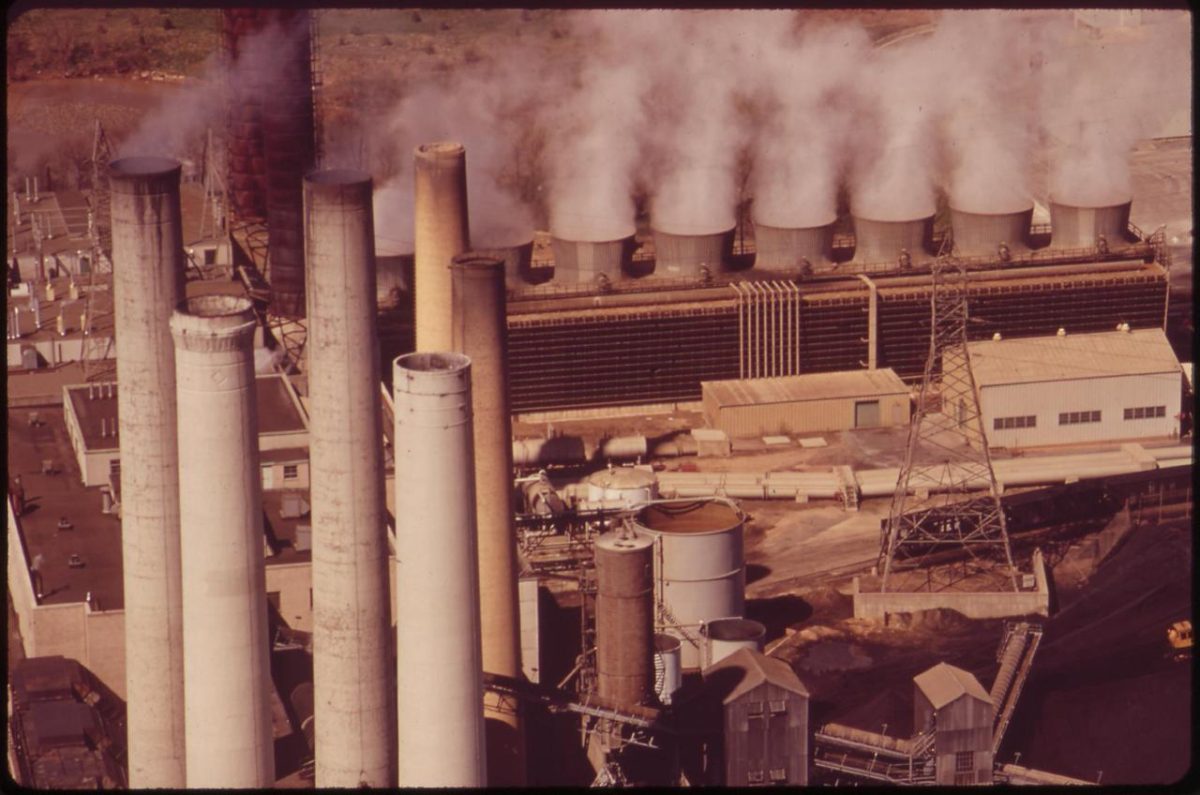
image: smokestacks

These belching smokestack pictures never get old, right? Uh, right?

On June 29, the US Environmental Protection Agency (EPA) issued “Step 3″ of the Greenhouse Gas (GHG) Tailoring Rule, confirming that the GHG emissions thresholds for permitting under the New Source Prevention of Significant Deterioration (PSD) and Title V Operating Permits programs would remain unchanged from the levels set in July 2011.

PSD permit requirements will continue to apply for new facilities that emit more than 100,000 tons per year (tpy) of carbon dioxide equivalents and for existing facilities subject to PSD that intend to increase GHG emissions by 75,000 tpy. Title V operating permit requirements apply to new and existing facilities that emit more than 100,000 tpy of CO2 equivalents.
(more…)

July 12, 2012

After a brief respite, TSCA Chemical Data Reporting deadline looms

On June 18, the US Environmental Protection Agency (EPA) quietly extended the deadline for submission of the inaugural Toxic Substances Control Act (TSCA) Chemical Data Reports, formerly known as TSCA Section 8(a) Inventory Update Reports. (Just in time, as the reports were due by June 30.) But don’t relax just yet – the revised due date is August 13, 2012, just a month away!

The CDR rule (40 CFR part 711) requires manufacturers and importers of certain chemical substances included on the TSCA Chemical Substance Inventory to report current data on the manufacturing, processing, and use of the chemical substances. (I know what you’re thinking: Didn’t we just report this information on our annual Toxic Release Inventory Form R submissions? But, really, this is something different.) The required data include current information on chemical substance production volumes, manufacturing sites, and how the chemical substances are used.

As amended in the August 16, 2011, Federal Register, the Inventory Update Rule was renamed the Chemical Data Reporting rule with the following reporting thresholds and requirements:
(more…)

July 3, 2012

image: Happy Independence Day!

Filed under: Uncategorized — Editor @ 1:30 pm
Older Posts »